
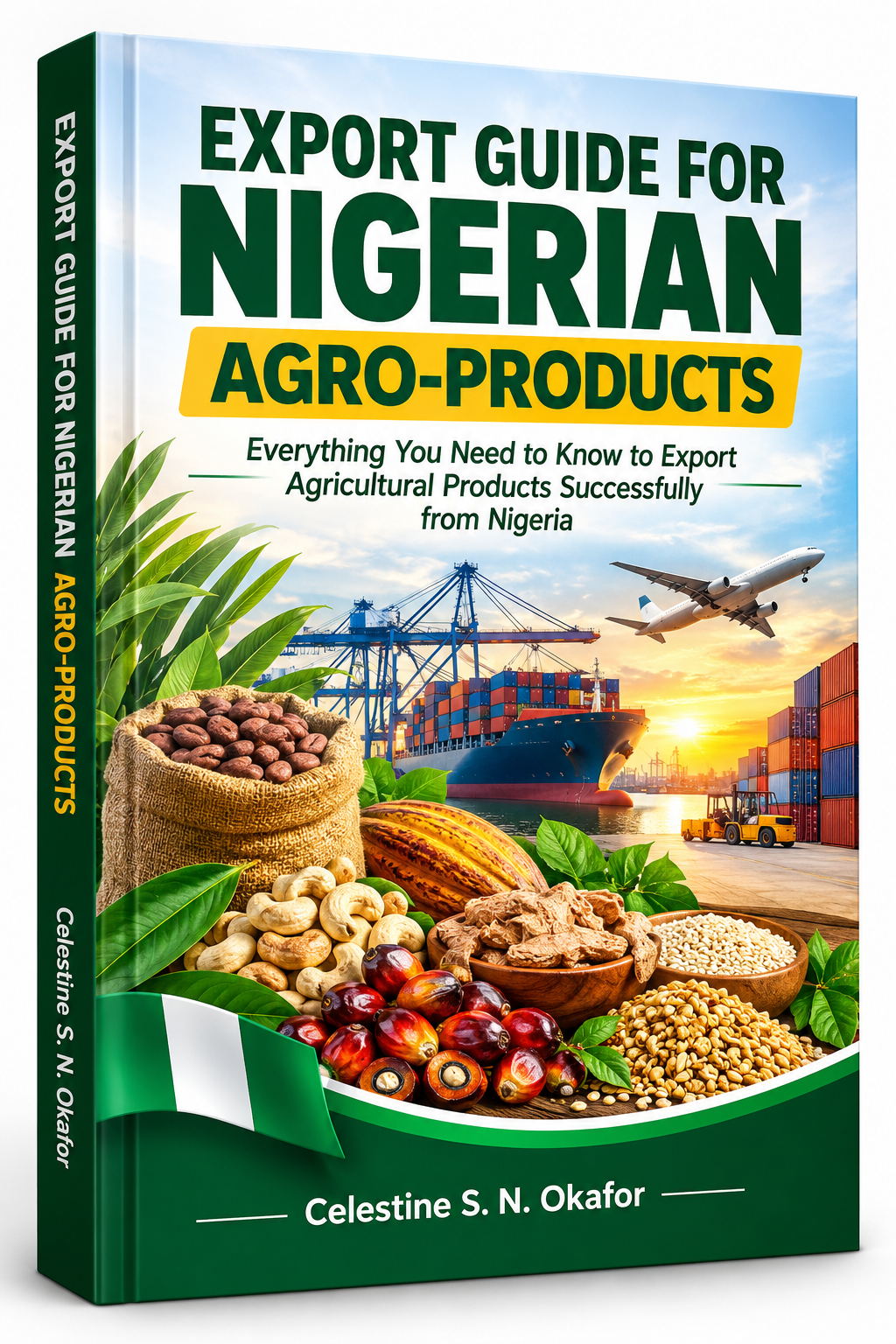
⁷Nigeria is one of Africa’s largest agricultural economies, with a wide variety of crops and agricultural products capable of serving both domestic and international markets. From cocoa, sesame, cashew and ginger to hibiscus, shea products, palm products, yam and processed cassava products, the country has enormous potential in agricultural exports.
Yet, having an agricultural product that is available in Nigeria does not automatically make it an exportable product.
Exporting successfully requires much more than finding a foreign buyer and putting agricultural products into bags. An exporter must understand the product, identify a suitable market, meet quality requirements, comply with Nigerian and destination-country regulations, negotiate properly with buyers, arrange transportation, prepare documentation and manage financial and commercial risks.
This book is designed to help you understand these processes.
Whether you are a farmer who wants to sell beyond the Nigerian market, an agricultural trader, an aspiring exporter, a cooperative, a processor or an entrepreneur looking for a new business opportunity, understanding the fundamentals of agro-export is the first step.
- What Is Agro-Product Export?
- Why Export Agricultural Products?
- Nigeria’s Agro-Export Opportunity
- The Difference Between Trading and Exporting
- Who Can Become an Agro-Exporter?
- The Basic Agro-Export Business Model
- The Importance of Market Research
- Understanding the Buyer
- Quality Is More Important Than Quantity
- Consistency Builds an Export Business
- Common Mistakes New Exporters Make
- What You Need to Succeed
- Your First Export Should Be a Learning Experience
- Chapter One Action Checklist


Reviews
There are no reviews yet.