
Blogs

Welcome to Harvest With Purpose: Growing Faith, Enterprise and Sustainable Living
Welcome!
Welcome to Harvest With Purpose, a platform created to inspire, educate and empower individuals who desire to live meaningful lives while making a positive impact in their families, businesses, communities and society.
Whether you are a farmer seeking modern agricultural knowledge, an entrepreneur building a sustainable business, a young graduate searching for opportunities, or a Christian longing to grow spiritually, you have found a place where practical knowledge meets timeless values.
At Harvest With Purpose, we believe that every harvest begins with a seed. The seeds we plant today – our faith, our knowledge, our integrity and our actions – determine the harvest we will enjoy tomorrow.
Why Harvest With Purpose Exists
The world is changing rapidly. Agriculture is becoming more technology-driven. Businesses are becoming increasingly competitive. Society is facing moral and spiritual challenges that require wisdom, integrity and purposeful leadership.
Yet many people still struggle to find reliable information that combines practical solutions with sound values.
Harvest With Purpose was established to bridge that gap by providing resources that help people grow intellectually, professionally and spiritually.
Our mission is simple:
To cultivate people of purpose who will transform lives through faith, innovation and responsible enterprise.
Our Three Core Pillars
1.
Agribusiness & Agri-tech
Agriculture remains one of the greatest opportunities for economic transformation in Nigeria and across Africa.
We publish practical articles on:
Modern farming techniques
Climate-smart agriculture
Agri-tech innovations
Agribusiness opportunities
Farm management
Youth participation in agriculture
Agricultural entrepreneurship.
2.
Faith & Purpose
Success without purpose often leaves people feeling empty.
This section explores biblical principles that help readers discover God’s purpose, strengthen their faith and develop Christ-like character.
Topics include:
Christian living
Purpose discovery
Leadership
Personal growth
Stewardship
Prayer and spiritual formation
3.
Business & Consulting
Ideas become reality through planning and disciplined execution.
Here we share practical guidance on:
Business planning
Proposal writing
Grant applications
Entrepreneurship
Small business development
Productivity
Leadership and consulting
What You Can Expect
As this platform grows, you will find:
Weekly blog articles
Practical ebooks
Business templates
Agricultural guides
Faith-based resources
Training opportunities
Consulting services
Everything published here is designed to provide practical value while encouraging responsible leadership and service.
Join the Journey
Growth does not happen overnight. Like planting a seed, it requires patience, learning and perseverance.
Wherever you are today, I invite you to join this journey of growth.
May Harvest With Purpose become a trusted companion as you cultivate a fruitful life rooted in faith, guided by knowledge and driven by purpose.
Thank you for visiting.
Welcome to Harvest With Purpose.
“Those who sow with tears shall reap with shouts of joy.” — Psalm 126:5
Call to Action
If you enjoyed this article, subscribe to our newsletter to receive new articles, practical resources and updates on our latest ebooks and training opportunities.
Click my site link to get ebooks:
https://harvestwithpurpose.com
About the Author: Celestine S. N. Okafor is the Managing Director of Celiz Consult Limited and the founder of HarvestWithPurpose.com. He writes on agribusiness, agri-tech, Christian living, entrepreneurship, and business development, with a passion for equipping individuals and communities to grow with purpose.

What Does It Mean to Live a Life of Purpose?
Introduction
Many people spend their lives chasing success, wealth, recognition or comfort, believing these things alone will bring lasting satisfaction.
Yet history and experience repeatedly show that achievements without purpose often leave an emptiness that material possessions cannot fill.
Purpose gives direction to our lives. It shapes our decisions, influences our priorities and helps us remain focused even during difficult times.
Living a life of purpose begins by asking an important question:
Why am I here?
Purpose Begins with God
From a Christian perspective, purpose is not something we invent for ourselves. It is something we discover through our relationship with God.
The prophet Jeremiah reminds us:
“For I know the plans I have for you,” declares the Lord, “plans for your welfare and not for evil, to give you a future and a hope.” (Jeremiah 29:11)
Every person has been created with dignity, unique gifts and a calling to contribute positively to the world.
Discovering that calling requires prayer, reflection and openness to God’s guidance.
Purpose Is More Than Success
Many successful people remain unfulfilled because success and purpose are not the same.
Purpose asks questions such as:
How can I serve others?
What gifts has God entrusted to me?
What legacy will I leave?
How can my work glorify God?
When success is guided by purpose, it becomes a blessing not only to ourselves but also to those around us.
Purpose Requires Growth
Purpose is rarely discovered overnight.
It develops through learning, perseverance and faithful service.
Practical steps include:
Reading and continuous learning.
Developing useful skills.
Seeking wise mentors.
Serving others faithfully.
Building strong character.
Remaining committed to prayer.
Every experience, whether joyful or challenging, can become part of God’s work of shaping us.
Obstacles to Living with Purpose
Several attitudes can hinder purposeful living:
Fear of failure
Lack of discipline
Comparing ourselves with others
Chasing popularity instead of significance
Focusing only on immediate rewards
Purpose flourishes when we choose faith over fear and obedience over convenience.
Living Purposefully Every Day
Purpose is not limited to extraordinary achievements.
It is reflected in everyday faithfulness:
A farmer cultivating the land with integrity.
A teacher shaping young minds.
A business owner serving customers honestly.
Parents raising children with love and wisdom.
Young people preparing themselves to contribute to society.
Purpose is found wherever our God-given gifts meet the needs of others.
Conclusion
God has created each of us for more than mere existence.
He calls us to live intentionally, serve faithfully and leave a positive impact on our generation.
No matter your age or background, today can be the beginning of a more purposeful life.
Start where you are.
Use what you have.
Trust God for the journey ahead.
As you continue exploring Harvest With Purpose, may every article inspire you to grow in faith, knowledge and service.
“Commit your work to the Lord, and your plans will be established.” — Proverbs 16:3
Reflection Questions
What gives my life its deepest meaning?
Am I pursuing success, purpose or both?
Which gifts has God entrusted to me?
What practical step can I take this week to live more intentionally?
Call to Action
If this article encouraged you, share it with a friend and subscribe to Harvest With Purpose for more insights on faith, agribusiness and purposeful living.
About the Author: Celestine S. N. Okafor is the Managing Director of Celiz Consult Limited and the founder of HarvestWithPurpose.com. He writes on agribusiness, agri-tech, Christian living, entrepreneurship, and business development, with a passion for equipping individuals and communities to grow with purpose.
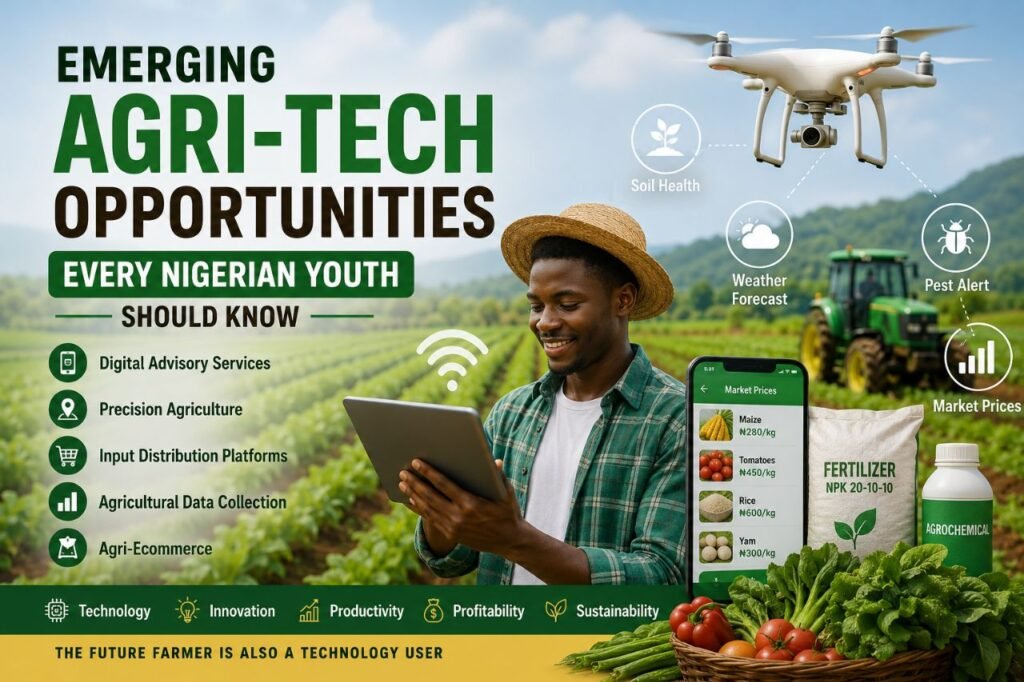
Emerging Agri-Tech Opportunities Every Nigerian Youth Should Know
Introduction
Nigeria is blessed with abundant agricultural resources, yet millions of young people remain unemployed or underemployed. While many still see agriculture as manual labour with little financial reward, a new wave of innovation is changing that perception.
Today, technology is transforming farming into a smarter, more profitable, and more attractive industry. From mobile applications to drones and online marketplaces, Agri-Tech (Agricultural Technology) is creating exciting business and career opportunities for Nigerian youth.
If you’re looking for a profitable venture, now is an excellent time to explore how technology is reshaping agriculture.
1. Digital Farm Advisory Services
Many smallholder farmers struggle because they lack access to timely and accurate agricultural information. Digital farm advisory platforms are helping bridge this gap by delivering valuable information directly to farmers through mobile phones.
These services provide:
- Weather forecasts that help farmers plan planting and harvesting activities.
- Pest and disease alerts to reduce crop losses.
- Current market prices to help farmers sell at better rates.
- Best farming practices tailored to specific crops and locations.
This creates opportunities for young Nigerians to develop agricultural apps, provide extension support, create local-language agricultural content, or work with organizations delivering digital advisory services.
2. Precision Agriculture
Precision agriculture uses modern technology to improve farming efficiency while reducing waste and production costs.
Some of the key technologies include:
- GPS systems for accurate field mapping and farm planning.
- Sensors that monitor soil moisture, temperature, and nutrient levels.
- Drones for crop monitoring, field surveys, spraying, and detecting early signs of crop stress.
As more commercial farms adopt these technologies, there is growing demand for drone operators, GIS specialists, precision farming consultants, and agricultural technology service providers.
Young people with skills in technology can build rewarding careers without necessarily owning large farms.
3. Farm Input Distribution Platforms
Access to quality farm inputs remains one of the biggest challenges facing Nigerian farmers. Digital platforms are making it easier to connect farmers with trusted suppliers.
These platforms enable farmers to purchase:
- Improved seeds
- Fertilizers
- Agrochemicals
- Farm tools and equipment
Entrepreneurial youth can establish online agro-input stores, become digital sales agents, manage logistics, or build platforms that connect rural farmers with verified suppliers.
As internet access continues to expand, digital agricultural marketplaces are becoming increasingly important.
4. Agricultural Data Collection
Data is becoming one of agriculture’s most valuable assets.
Governments, research institutions, development agencies, agribusiness companies, and financial institutions all require accurate agricultural data to make informed decisions.
This has created growing demand for:
- Farm data collectors
- Field survey officers
- Agricultural enumerators
- GIS mapping assistants
- Farm monitoring specialists
Young people with good communication skills, smartphone literacy, and basic agricultural knowledge can find opportunities in this rapidly growing field.
Agricultural data also supports insurance companies, financial institutions, and food security programmes.
5. Agri-Ecommerce
The internet has made it possible for farmers and agribusinesses to reach customers beyond their local communities.
Instead of relying solely on traditional markets, agricultural products can now be sold through websites, social media platforms, and online marketplaces.
Examples include selling:
- Fresh fruits and vegetables
- Grains
- Processed food products
- Livestock products
- Farm inputs
Agri-ecommerce reduces the number of middlemen, improves market access, and often enables farmers to earn better prices.
Young entrepreneurs can build online farm stores, manage digital marketing campaigns, provide delivery services, or create platforms that connect buyers directly with producers.
Why Nigerian Youth Should Pay Attention
The Agri-Tech sector presents enormous opportunities for young Nigerians for several reasons.
Growing Market
Nigeria’s growing population continues to increase demand for food. This creates long-term opportunities for businesses that improve agricultural productivity and food distribution.
Low Entry Barriers
Many Agri-Tech opportunities require more creativity and digital skills than large financial investments. A smartphone, internet access, and the willingness to learn can be enough to get started.
Increasing Smartphone Penetration
With millions of Nigerians now using smartphones, digital agricultural solutions can reach farmers across rural and urban communities more easily than ever before.
This creates opportunities for software developers, digital marketers, content creators, trainers, logistics providers, and agricultural consultants.
Conclusion
The future of agriculture is no longer defined only by tractors and hoes. It is increasingly driven by smartphones, digital platforms, data, sensors, drones, and innovative technologies.
The future farmer is also a technology user.
For Nigerian youth willing to embrace innovation, Agri-Tech offers multiple pathways to build successful businesses, create employment, improve food security, and contribute to national development.
The best time to begin exploring these opportunities is now.
Call to Action
Which of these Agri-Tech opportunities interests you the most?
Share your thoughts in the comments below. If you know a young person looking for career or business opportunities, share this article with them and help spread awareness about the future of agriculture in Nigeria.
Don’t forget to subscribe to HarvestWithPurpose.com for more practical insights on Agribusiness, Agri-Tech, entrepreneurship, and wealth creation.
About the Author: Celestine S. N. Okafor is the Managing Director of Celiz Consult Limited and the founder of HarvestWithPurpose.com. He writes on agribusiness, agri-tech, Christian living, entrepreneurship, and business development, with a passion for equipping individuals and communities to grow with purpose.

How to Write a Winning Business Proposal
Introduction
Many brilliant business ideas never receive funding – not because they lack potential, but because they are poorly presented. Investors, grant organizations, financial institutions, and development partners receive countless proposals every year. To stand out, your proposal must clearly communicate your idea, demonstrate its feasibility, and inspire confidence in your ability to deliver results.
Whether you’re seeking funding for a startup, an agribusiness project, or a social enterprise, learning how to write a winning business proposal is an essential skill.
What Is a Business Proposal?
A business proposal is a formal document that explains your business idea or project to potential investors, clients, donors, or funding organizations. Its purpose is to convince the reader that your proposed solution is practical, valuable, and worthy of support.
A strong business proposal typically explains:
- The problem or need being addressed.
- The solution your business or project provides.
- The estimated cost of implementation.
- The expected outcomes and benefits.
An effective proposal is not just informative – it is persuasive.
Key Sections of a Winning Business Proposal
1. Executive Summary
The executive summary is the first section of your proposal, but it is often written last. It provides a concise overview of your entire proposal.
Include:
- Your business or project name.
- The problem you intend to solve.
- Your proposed solution.
- The amount of funding required (if applicable).
- The expected impact.
A compelling executive summary encourages the reader to continue reading.
2. Problem Statement
Clearly define the problem your business or project seeks to solve.
Answer questions such as:
- What challenge exists?
- Who is affected?
- Why is this problem important?
- What evidence supports the need for your solution?
Use reliable data, statistics, or real-life examples whenever possible to strengthen your argument.
3. Proposed Solution
This section explains how your product, service, or project will solve the identified problem.
Describe:
- Your business idea.
- The products or services you offer.
- Your target customers or beneficiaries.
- What makes your solution unique or better than existing alternatives.
Focus on the value your solution creates rather than simply describing your business.
4. Implementation Plan
Your proposal should demonstrate that you have a practical plan for execution.
Include:
- Key project activities.
- Timeline
- Resources required.
- Team members and their responsibilities.
- Major milestones.
A well-structured implementation plan shows that your project is realistic and achievable.
5. Budget
Provide a detailed and realistic estimate of the costs involved.
Your budget may include:
- Equipment
- Personnel
- Materials
- Marketing
- Transportation
- Administrative expenses
- Contingency costs
Ensure that every cost is justified and aligns with your implementation plan.
6. Expected Results
Explain the outcomes you expect once the project is implemented.
Examples may include:
- Increased revenue.
- Job creation.
- Improved productivity.
- Higher crop yields.
- Better customer satisfaction.
- Positive social or environmental impact.
Whenever possible, include measurable targets to make your proposal more credible.
Common Mistakes to Avoid
Many proposals fail because of avoidable errors. Here are some of the most common mistakes:
Lack of Clarity
Avoid vague language and unnecessary jargon. Your proposal should be easy to read and understand.
Unrealistic Budgets
Overestimating or underestimating costs can reduce your credibility. Ensure your budget reflects current market realities.
Poor Formatting
A proposal with inconsistent fonts, poor spacing, spelling errors, or disorganized sections creates a negative impression. A clean, professional layout improves readability and demonstrates attention to detail.
Weak Market Analysis
Failing to explain your target market, competitors, or demand for your product or service can make your proposal less convincing. Include relevant market research to support your business case.
Conclusion
A winning business proposal does more than describe an idea – it persuades the reader that your business or project is worth supporting. By presenting a clear problem, a practical solution, a realistic budget, and measurable outcomes, you significantly increase your chances of securing funding, attracting clients, or winning partnerships.
Remember, a great idea deserves a great presentation.
Call to Action
Do you need a professionally written business proposal for a grant application, investor presentation, loan request, or business project?
Celiz Consult Limited provides expert business proposal writing, business plan development, grant proposal preparation, and agribusiness consulting services tailored to entrepreneurs, startups, NGOs, and growing businesses.
Contact us today to discuss your project and let us help you prepare a compelling proposal that inspires confidence and opens doors to new opportunities.
Click my site link to get ebooks:
https://harvestwithpurpose.com
About the Author: Celestine S. N. Okafor is the Managing Director of Celiz Consult Limited and the founder of HarvestWithPurpose.com. He writes on agribusiness, agri-tech, Christian living, entrepreneurship, and business development, with a passion for equipping individuals and communities to grow with purpose.
